How to Trade Meme Coins Without Losing Your Capital to Emotions
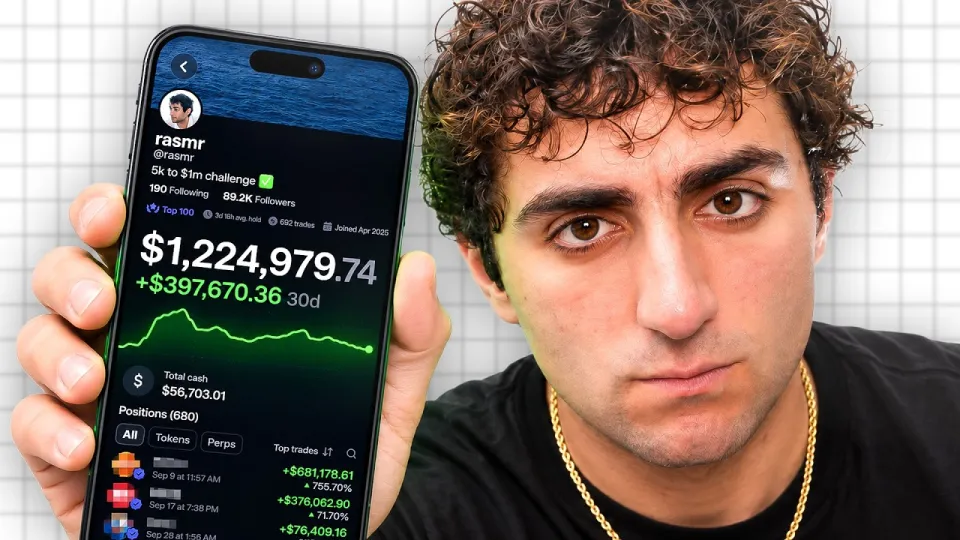
Video: 5 Years of Memecoin Knowledge in 12 Minutes
You can order the same kind of articles for your own video to boost it on YouTube and Google. Just message the Telegram bot @sat_sit_bot. It writes articles around your video, embeds the video and publishes them on popular niche websites (no ads). Your first 50 articles are free.
· based on the channel rasmr
Meme coins are highly volatile tokens with no cash flow, priced almost entirely by narrative and attention, so trading them profitably means planning your exit before you buy and removing emotion from every decision. A working approach combines narrative research, liquidity and holder checks, pre-set market cap exit levels, and strict position sizing — and it is exactly the framework the rasmr channel distils in its 12-minute breakdown of five years of memecoin experience. If you want to follow the trades discussed in that video, registration through the fomo trading platform gives you access to the same environment.
What actually moves a meme coin price
A meme coin has no earnings, no product and no balance sheet, so its price is a function of attention and the story attached to it. That story — the narrative — determines who buys, how fast, and how long they stay. Practically, this means you are trading sentiment, not fundamentals, and sentiment decays quickly.
Four forces dominate short-term price action:
- Narrative strength — whether the token taps into something the market already cares about (a trending figure, an event, a cultural moment, a viral animal). Weak narratives die within hours.
- Launch mechanics — who released the token and how supply was distributed. A launch where insiders hold a large share of supply is structurally different from one with a wide, fair distribution.
- Liquidity depth — a thin pool means your own sell order moves the price against you. Check the pool size before you size your position.
- Attention flow — where the token is being discussed and whether that discussion is organic or paid. Paid promotion is not automatically bad, but it tells you who is being sold to.
A useful habit is to write down the narrative in one sentence before buying. If you cannot, you do not have a thesis — you have a feeling.
The three checks before any meme coin entry
Before committing capital, run three fast checks that eliminate most bad trades in under five minutes. They are not guarantees, but they filter out the setups where the odds are structurally against you.
- Holder concentration. Look at how much supply the top wallets control. If a handful of addresses hold a large percentage, those wallets can exit into your buy. Distribution matters more than the chart at this stage.
- Liquidity versus your position size. Your position should be small enough that exiting it does not crater the pool. A common rule is to keep your own order well below a single-digit percentage of available liquidity.
- Who launched it and why. Identify the team, the deployer wallet history and whether the token is a copy of an existing project. A launch tied to a real, current narrative behaves differently from a recycled ticker.
Beyond these, check whether the contract has obvious red flags — mint authority still active, trading restrictions, or a tax that changes after launch. None of this requires deep technical skill; it requires five minutes of discipline before the excitement takes over.
Position sizing and the rule that keeps you solvent
Meme coin trading is a game of survival first and returns second, because a single zero wipes out many small wins. Size every position as if it can go to zero, because sometimes it will — and sometimes within minutes.
A practical structure:
- Define a total speculative budget separate from your main portfolio. This is money whose complete loss changes nothing about your life.
- Split that budget into many small positions rather than a few large ones. Ten small bets survive a string of losses; one large bet does not.
- Cap any single position at a small fraction of the speculative budget — a few percent is common among traders who last.
- Never add to a losing meme coin position to average down. Averaging down works on assets with fundamentals; on a token with no cash flow it is usually just doubling a mistake.
This is the least exciting part of the process and the one that separates traders who are still around after several years from those who are not.
Why emotions destroy meme coin accounts
The most common way to lose money in this market is not a bad pick — it is a bad reaction to a good or bad position. Two emotional patterns account for a large share of retail losses.
Holding a loser and hoping. When a position goes against you, the temptation is to wait for the chart to recover. On a token with no fundamental floor, hope is not a strategy. A pre-defined invalidation level — the price at which your thesis is simply wrong — turns that decision into a rule instead of a debate.
Round-tripping a winner. Watching an unrealised gain of 50–100% evaporate because you wanted more is one of the most reported experiences among new traders. The fix is mechanical: decide in advance at which market capitalisation levels you will sell portions, and execute those sells without renegotiating with yourself.
A third pattern is entering out of boredom or excitement after seeing a chart move vertically. Buying because something is going up is not a thesis; it is a reaction to someone else's exit.
Scaling out: how to take profit on a meme coin
Taking profit in tranches is the most reliable way to convert a paper gain into realised capital. Nobody sells the exact top consistently, so the goal is not precision — it is participation in the upside while guaranteeing that some of it is banked.
A workable template:
- Decide your exit levels before entering, expressed in market capitalisation rather than price, because market cap is the number the market actually watches.
- Sell a first portion early enough that the trade is de-risked — many traders take their initial capital back at the first target.
- Sell further tranches at higher market cap levels, leaving a small runner for the tail end of the move.
- Once your initial capital is out, the remaining position is house money, and holding it no longer threatens your account.
Market cap levels where other participants tend to start selling are worth studying in advance: round numbers and well-known thresholds attract sell orders, and knowing where they sit tells you where the pressure will come from.
Common questions from newer traders
Newer traders tend to ask the same handful of things, and the answers are usually structural rather than tactical.
- "Should I start small?" Yes. Starting with a small amount of capital is not a limitation — it is how you learn the mechanics of entries, exits and platform behaviour without paying tuition at full price.
- "How do I know a coin will rug?" You cannot know for certain, but you can price the risk: concentrated holder supply, thin liquidity, an anonymous team with a fresh wallet history and a narrative that exists only in paid promotion all raise the probability.
- "Should I buy a token tied to a big upcoming event or release?" Event-driven narratives can work, but they are crowded and time-limited. The question is not whether the story is popular; it is whether you are early and whether you have an exit plan for when the attention fades.
- "Is it bad to sell at a loss?" Cutting a position whose thesis is broken is a cost of doing business, not a failure. The failure is letting a small loss become an account-ending one.
Useful links
The bottom line
Meme coin trading rewards process over prediction: a clear narrative thesis, three fast checks on holders, liquidity and launch origin, small position sizes, and pre-committed exit levels. The traders who survive multiple cycles are not the ones who pick the biggest winner — they are the ones who never let a single position decide their future. The rasmr channel's twelve-minute retrospective on five years of memecoin experience is a compact reference for exactly this discipline, and it is worth watching alongside a written plan of your own. If you want to put the framework into practice, start with a small account through fomo and treat the first months as paid education rather than a lottery ticket.
Key takeaways
- Meme coin prices are driven by narrative and attention, not by cash flow or revenue — so the exit plan matters more than the entry.
- Most retail losses come from two behaviours: refusing to cut a losing position and round-tripping an unrealised 50–100% gain.
- Liquidity, holder concentration and who launched the token are the three fastest filters before buying any new meme coin.
- Scaling out in tranches at pre-set market cap levels beats trying to sell the exact top.
- Never risk capital you cannot afford to lose entirely — meme coins can go to zero within minutes.
Source: 5 Years of Memecoin Knowledge in 12 Minutes · Markdown version
Questions & answers
How much capital should a beginner allocate to meme coins?
Only money whose total loss would not affect your finances — treat it as a separate speculative budget. Split it across many small positions rather than a few large ones, and cap each position at a few percent of that budget. Starting small is not a disadvantage; it lets you learn the mechanics without expensive mistakes.
How do I take profit without round-tripping my gains?
Set exit levels in market capitalisation terms before you enter, then sell in tranches. A common approach is to recover your initial capital at the first target, sell further portions at higher market cap levels, and leave a small runner for the tail end. The key is executing the plan without renegotiating it while the chart is moving.
What signals make a meme coin more likely to rug?
Concentrated supply in a few wallets, thin liquidity relative to your position, an anonymous team with a fresh deployer wallet, and promotion that exists only as paid advertising all raise the risk. None of these proves a rug, but together they tell you the odds are structurally poor.
Should I average down on a meme coin that dropped?
Generally no. Averaging down relies on an asset having a fundamental floor, and meme coins have none — their price is driven by attention that can disappear entirely. A pre-defined invalidation level is a better tool: if the thesis is broken, exit rather than doubling the mistake.